
Presentation
From human connection to human–AI collaboration: Rethinking mentoring in the age of artificial intelligence
- April 19-20, 2027
- Paris, France
Biography
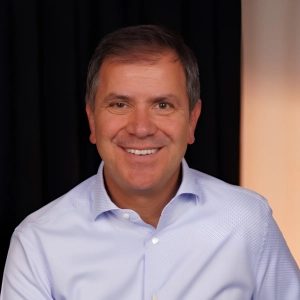
Riza Kadilar is an alumnus of Stanford University, HEC Paris, METU, and INSEAD and also a PhD in media economics. His professional career includes senior level bank management for almost thirty years in the UK, the Netherlands, France and Turkey. He served as the president of EMCC Global between 2017 and 2024. He contributes to the democratization of learning & development with his online platform (RK Academy) and with his EMCC Quality Award recipient training programs on mentoring and coaching. He is a visiting professor in various universities and has delivered numerous motivational speeches during the last twenty years to tens of thousands of participants in more than thirty countries. He is the author of nine published books, and columnist at Harvard Business Review Turkey. He invests in technology startups, and provides executive mentoring & coaching, business development and financial advisory services through his company K Ventures.
Abstract
Artificial intelligence is fundamentally transforming the nature of work, the way individuals learn, and the relationships through which they develop professionally and personally. While AI promises unprecedented opportunities for productivity, accessibility and personalised support, its implications for psychological wellbeing are more complex. As organisations integrate AI into everyday working practices, employees face new challenges involving cognitive overload, uncertainty, professional identity, autonomy, trust and human connection.
This presentation examines how artificial intelligence is reshaping the role of developmental and transformational mentoring in supporting workplace wellbeing. Building on established mentoring principles, the EMCC Global mentoring framework and Seligman's PERMA model of wellbeing, it proposes that AI creates both an opportunity and a responsibility to reconsider the mentoring relationship.
We will explore three interconnected dimensions: AI as a source of new workplace wellbeing challenges, AI as an enabler of mentoring and reflective development, and the evolving role of human mentors in an increasingly AI-mediated workplace.
The presentation introduces a proposed Human–AI Mentoring Ecosystem framework, in which artificial intelligence, human mentors and organisational culture contribute complementary capabilities to support individual flourishing.
The central argument is that the future of mentoring should not be defined by competition between human and artificial intelligence, but by their intentional collaboration. The ultimate measure of success should be whether AI-enabled mentoring strengthens human agency, meaningful relationships, psychological resilience and the capacity for independent thought.