

Speaker
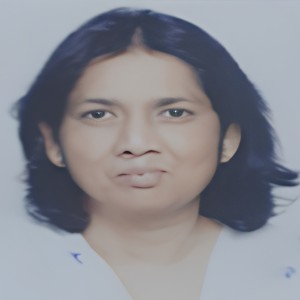
Anuradha Yadav
- SMS Medical College
- India
Presentation
Comparison of spectral analysis of gamma band activity during actual and imagined movements as a cognitive tool
- April 19-20, 2027
- Paris, France
Biography
Anuradha Yadav is a Professor of Physiology at SMS Medical College, Jaipur, India. She completed her PhD in Physiology at the age of 32 years from SMS Medical College under the University of Rajasthan. She has over 26 years of teaching and academic experience and more than 50 research publications with over 100 citations. Two PhD scholars have successfully completed their doctoral degrees under her supervision. Her research interests include neurophysiology, cognitive neuroscience, sleep physiology, exercise physiology, and mental health. She has served as a reviewer for journals published by BMC (Springer Nature) and is actively involved in medical education, postgraduate teaching, and research activities.
Abstract
Background: Imagined motor movement is a cognitive process in which a subject imagines a movement without doing it, which activates similar brain regions as during actual motor movement. Brain Gamma Band Activity (GBA) is linked to cognitive functions such as perception, attention, memory, awareness, synaptic plasticity, motor control, and Imagination. Motor imagery can be used in sports to improve performance, raising the possibility of using it as a rehabilitation method through brain plasticity through mirror neurons.
Methods and Materials: A comparative observational study was conducted on 56 healthy male subjects after obtaining clearance from the Ethics Committee. EEG recordings for GBA were taken for resting, real, and imaginary motor movements and compared. The power spectrum of gamma waves was analysed using the Kruskal–Walli’s test; a p-value <.05 was considered significant.
Results: The brain gamma rhythm amplitude was statistically increased (p < .05) during both actual and imaginary motor movement compared to baseline (resting stage) in most of the regions of the brain except the occipital region. There was no significant difference (p > .05) in GBA between real and imaginary movements.
Conclusion: Both actual and imagined motor movements increased gamma-band activity compared with baseline, indicating enhanced cognitive activation. Similar gamma activity during both conditions suggests that motor imagery may be a useful adjunct to actual movement for motor rehabilitation and mirror therapy.
