
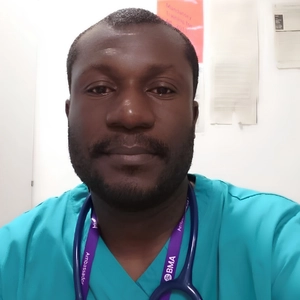
Joshua Nmezi
Pilgrim Hospital, UKPresentation Title:
Ethical dilemmas in end-of-life care: A psychological and anaesthetic perspective
Abstract
Background: End-of-life care presents some of the most complex and emotionally challenging ethical dilemmas in modern medicine. For anaesthetists and clinical psychologists, these dilemmas intersect at the critical juncture where physiological support meets psychological suffering. The psychological distress experienced by many dying patients is not merely a secondary symptom of physical pain but a primary form of suffering (existential suffering) that demands its own therapeutic framework.
Methods and Materials: This editorial synthesises literature on end-of-life ethics, examines the specific roles of anaesthetists and clinical psychologists within a collaborative model, analyses culturally specific decision-making frameworks for Nigerian and African contexts, and reviews the impact of the COVID-19 pandemic on end-of-life care. Principles of biomedical ethics (autonomy, beneficence, non-maleficence, and justice) and the doctrine of double effect provide the analytical framework.
Results: Key ethical dilemmas explored include withholding and withdrawing life-sustaining treatment, do-not-resuscitate orders, medically administered nutrition and hydration, palliative sedation, and requests for assisted dying. The anaesthetist's role extends beyond pharmacology to include proactive communication, symptom autopsy, and reframing care as comfort-focused presence. The clinical psychologist's role includes dignity therapy, meaning-centred psychotherapy, and screening for existential distress. In African contexts, family-centric consensus models and request-based disclosure frameworks are essential. The COVID-19 pandemic introduced novel challenges including "lonely dying" and heightened existential distress among patients and staff.
Conclusion: Ethical dilemmas in end-of-life care require more than generic principles; they demand an interdisciplinary clinical response targeting existential suffering as a distinct entity. Integrating anaesthetic and psychological expertise offers comprehensive care that addresses both physical suffering and psychological distress, honouring patient dignity. Practical recommendations include specific communication scripts, cultural assessment tools, ethics audits, and self-care strategies to prevent moral distress and burnout.
Biography
Joshua Nmezi is a Specialty Doctor in Anaesthesia at Pilgrim Hospital, Boston, United Kingdom, with a unique interdisciplinary background that bridges anaesthesia and clinical psychology. He holds an MBBS and an MSc in Clinical Psychology, a Postgraduate Certificate in Medical Education, and is currently a PhD candidate in Clinical Psychology at Imo State University, Owerri, Nigeria. He is a Senior Registrar with the West African College of Surgeons (Anaesthesia) and is currently preparing for his Part 2 fellowship examinations. His research focuses on the intersection of perioperative care and psychological well-being, including phantom limb pain, preoperative anxiety, intraoperative panic, postoperative pain management, burnout among healthcare workers, and ethical dilemmas in end-of-life care. He has published in Cureus and has been invited to present at international conferences on neuroscience and mental health. His work is driven by a commitment to integrating psychological care into perioperative practice and addressing the systemic factors that affect both patient outcomes and healthcare worker well-being.

Organization Location
1309 Coffeen Avenue, STE 1200, Sheridan, Wyoming 82801, USA
General Enquiry
contact@scientexconferences.com
Finance Enquiry
finance@scientexconferences.com
Call us at
USA : (+1) 689 303 3812