
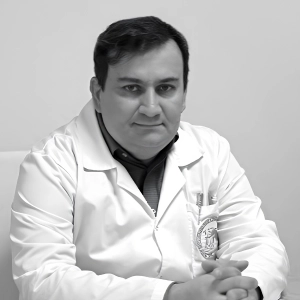
Sergey Alexandr Gulyaev
MEPHI, Russian FederationPresentation Title:
EEG phenomena of passive relaxed wakefulness and their place in the diagnostic process
Abstract
Background: The introduction of simultaneous MRI/fMRI-EEG studies into medicine has revealed discrepancies between EEG results and active structures determined by fMRI. However, the modern understanding of rhythmic activity from the perspective of large-scale neural network theory allows us to evaluate EEG as a technology that allows us to objectify the processes of human perception of the surrounding space.
The aim of the current study was to investigate rhythmic EEG phenomena in the alpha range under the conditions of their local determination to understand their role in the nature of cerebral activity.
Materials and Methods: The main study group consisted of 43 healthy volunteers. The comparison groups included 18 patients with epilepsy, 20 patients with hepatolenticular degeneration, 18 patients observed for dipsomania, and 23 patients observed by a psychiatrist for adjustment disorders. Primary data were recorded using a digital electroencephalograph (EEG) according to the proposed IFCN-25 system (2017-2023). The study segmented the EEG using the sLORETA software package, identifying eight distinct classes (variants) in the 8-14 Hz range (alpha band).
Results: The study demonstrated that alpha activity is a composite value, with contributions from rhythms in the visual cortex (areas 17-19), retrosplenial areas (areas 29-31), Wernicke's area (areas 39-40), and parietal area (area 7). In the control groups, alpha activity characteristics were found to differ significantly from those in the control group in most cases, excluding individuals with epilepsy examined during the interictal period.
Discussion and Conclusions: Rhythmic alpha-band activity recorded during EEG studies represents a complex value whose spatial determination allows the researcher to obtain information about the state of the perception system of the surrounding space. Modern EEG should be considered more as a method for diagnosing human mental functions and changes in the perception system in the objective diagnosis of mental disorders and substance abuse.
Biography
Sergey Aleksandr Gulyaev, Doctor of Medical Sciences, Professor at the Engineering Physics Institute of Biomedicine, National Research Nuclear University MEPhI. He is a neurologist of the highest qualification category, an epileptologist, and a specialist in functional neurophysiological studies of the brain. He is the author of four monographs on the neurophysiological diagnosis of nervous system diseases. He is the author of over 50 scientific publications and the founder of the scientific field of functional neurophysiology. He has 26 years of clinical experience treating diseases of the central nervous system. Under S.A. Gulyaev's supervision, unique neurophysiological studies are conducted to determine the potential for necessary neurorehabilitation measures in both children with various neurological dysfunctions and adults who have suffered from various diseases of the central nervous system.

Organization Location
1309 Coffeen Avenue, STE 1200, Sheridan, Wyoming 82801, USA
General Enquiry
contact@scientexconferences.com
Finance Enquiry
finance@scientexconferences.com
Call us at
USA : (+1) 689 303 3812