Latest Articles
Deep TMS Study for PTSD & Depression | Neuroscience Congress 2027
Latest
Largest Real-World Study Highlights Deep TMS as a Promising Treatment for PTSD and Depression

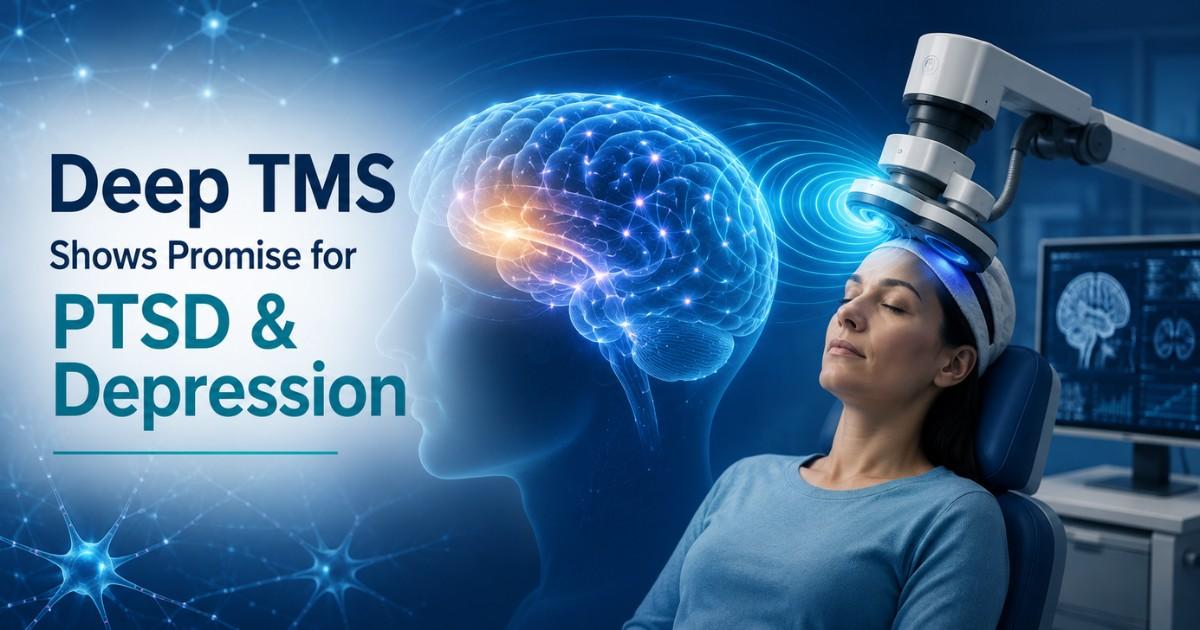
Post-Traumatic Stress Disorder (PTSD) and Major Depressive Disorder (MDD) frequently occur together, creating a significant challenge for both patients and healthcare professionals. Individuals living with these coexisting conditions often experience more severe symptoms, greater functional impairment, and a lower quality of life than those diagnosed with either disorder alone. Although psychotherapy and medications remain the cornerstone of treatment, many patients continue to experience persistent symptoms, emphasizing the need for more effective therapeutic approaches.Recent findings presented by researchers and reported in Psychiatric Times offer encouraging evidence that Deep Transcranial Magnetic Stimulation (Deep TMS) may provide meaningful clinical benefits for patients living with both PTSD and depression. The study represents the largest real-world analysis of Deep TMS conducted in this patient population to date, providing valuable insights into how this non-invasive brain stimulation therapy performs in routine clinical practice rather than under tightly controlled clinical trial conditions.The retrospective analysis included 462 patients diagnosed with both PTSD and MDD who received treatment across 11 clinical centers. Each participant completed at least 20 sessions of Deep TMS using specialized stimulation coils designed to target brain regions associated with mood regulation and emotional processing. Researchers evaluated treatment effectiveness by comparing symptom severity before and after therapy using well-established clinical assessment tools: the PTSD Checklist for DSM-5 (PCL-5) and the Patient Health Questionnaire-9 (PHQ-9).The results were highly encouraging. More than 83% of patients experienced a clinically meaningful improvement in PTSD symptoms, defined as at least a 50% reduction in symptom severity. On average, PTSD symptom scores declined by 52% following treatment. Improvements were also observed in depressive symptoms, with approximately 67% of patients achieving a significant treatment response and more than 27% reaching remission. Overall, depression scores decreased by an average of 50%, suggesting that Deep TMS may positively affect both conditions simultaneously. These findings highlight the potential of targeted brain stimulation to address complex psychiatric disorders that often prove difficult to treat using conventional therapies alone.PTSD and depression frequently reinforce one another, making recovery more complicated. Previous epidemiological studies indicate that nearly half of individuals diagnosed with PTSD also experience major depressive disorder during their lifetime. This combination is associated with increased suicide risk, chronic illness, greater disability, and reduced response to standard treatments. Because of this overlap, identifying therapies capable of improving both disorders at the same time is an important priority in mental health research.Deep TMS is a non-invasive neuromodulation technique that uses magnetic pulses to stimulate deeper brain networks involved in emotional regulation. Unlike medications, which influence brain chemistry throughout the body, Deep TMS directly targets specific neural circuits believed to contribute to psychiatric symptoms. The procedure does not require surgery or anesthesia, and patients remain awake during treatment sessions, making it an attractive option for individuals who have not responded adequately to conventional therapies.Despite these promising findings, researchers caution that the results should be interpreted carefully. The study was retrospective and reflects real-world clinical experience rather than a randomized controlled trial. Furthermore, Deep TMS has not yet received FDA clearance specifically for the treatment of PTSD or the combined diagnosis of PTSD and MDD, and the current findings remain preliminary while awaiting peer review. Additional prospective clinical trials will be necessary to confirm long-term safety, effectiveness, and optimal treatment protocols.Nevertheless, this large-scale analysis represents an important step forward in the evolving field of psychiatric neuromodulation. As researchers continue to explore innovative, non-invasive therapies, Deep TMS may emerge as a valuable addition to the treatment landscape for individuals living with complex mental health conditions. Continued scientific investigation will help determine how this technology can best complement existing psychological and pharmacological interventions, ultimately expanding treatment options for patients who continue to struggle with PTSD and depression.

Jul 11, 2026 Read Article

Alzheimer's Disease | Neuroscience Congress 2026 | Paris
Latest
Scientists Discover a Hidden Mechanism Behind Brain Cell Death in Alzheimer's Disease

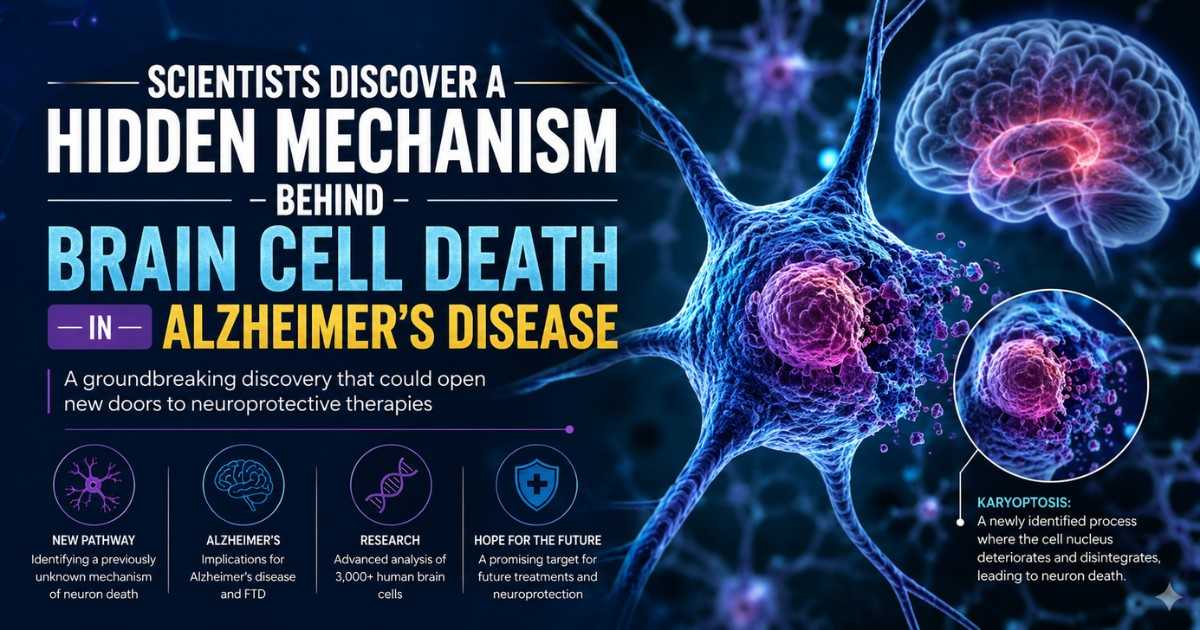
Alzheimer's disease remains one of the greatest challenges in modern neuroscience, affecting millions of people worldwide. While researchers have long understood that abnormal protein accumulation contributes to the disease, the precise mechanism responsible for widespread neuronal loss has remained unclear. A recent breakthrough by researchers at King's College London has now identified a previously overlooked form of brain cell death that may play a critical role in Alzheimer's disease and Frontotemporal Dementia (FTD).A New Perspective on NeurodegenerationFor decades, scientists have studied well-known pathways of programmed cell death, such as apoptosis, to explain why neurons die during neurodegenerative diseases. However, these mechanisms have not fully accounted for the extensive neuronal damage observed in Alzheimer's patients.The newly identified process, known as karyoptosis, involves progressive deterioration of the cell nucleus after toxic proteins accumulate within neurons. As the nucleus shrinks and eventually disintegrates, the affected neuron loses its ability to function and ultimately dies. This discovery offers an important missing piece in understanding how neurodegenerative diseases progress.Evidence from Human Brain TissueThe research team analyzed approximately 3,000 individual brain cells obtained from patients with Alzheimer's disease, frontotemporal dementia, and healthy controls. Advanced computational techniques enabled the scientists to distinguish multiple forms of neuronal death occurring within brain tissue.Remarkably, signs of karyoptosis were observed far more frequently in Alzheimer's brain samples than in healthy brain tissue, suggesting that this mechanism may significantly contribute to disease progression.Why This Discovery MattersIdentifying a new pathway responsible for neuronal death could transform future therapeutic strategies. Rather than treating only the symptoms of Alzheimer's disease, researchers may eventually develop treatments that interrupt this newly identified mechanism before irreversible neuronal damage occurs.Such neuroprotective approaches could potentially:Slow disease progressionPreserve cognitive functionDelay memory declineImprove long-term quality of life for patientsAlthough additional laboratory and clinical studies are required, this finding provides researchers with a promising new target for drug development.Implications for Neuroscience ResearchThe discovery also highlights the importance of understanding cellular mechanisms involved in neurodegeneration. As research continues to reveal how different forms of cell death contribute to diseases such as Alzheimer's and frontotemporal dementia, scientists move closer to developing more effective precision therapies.Advances like these reinforce the value of collaborative neuroscience research and demonstrate how modern computational biology, molecular neuroscience, and neuropathology are driving the next generation of medical breakthroughs.Looking AheadWhile there is currently no cure for Alzheimer's disease, discoveries such as this provide renewed optimism for patients, caregivers, clinicians, and researchers alike. Understanding exactly how neurons die represents a crucial step toward developing interventions capable of slowing or even preventing neurodegeneration.As the global burden of Alzheimer's disease continues to rise, ongoing research into cellular mechanisms like karyoptosis may ultimately pave the way for innovative treatments that protect brain health and improve patient outcomes.

Jul 11, 2026 Read Article

No articles match your search.

Deep TMS Study for PTSD & Depression | Neuroscience Congress 2027
Largest Real-World Study Highlights Deep TMS as a Promising Treatment for PTSD and Depression

Post-Traumatic Stress Disorder (PTSD) and Major Depressive Disorder (MDD) frequently occur together, creating a significant challenge for both patients and healthcare professionals. Individuals living with these coexisting conditions often experience more severe symptoms, greater functional impairment, and a lower quality of life than those diagnosed with either disorder alone. Although psychotherapy and medications remain the cornerstone of treatment, many patients continue to experience persistent symptoms, emphasizing the need for more effective therapeutic approaches.Recent findings presented by researchers and reported in Psychiatric Times offer encouraging evidence that Deep Transcranial Magnetic Stimulation (Deep TMS) may provide meaningful clinical benefits for patients living with both PTSD and depression. The study represents the largest real-world analysis of Deep TMS conducted in this patient population to date, providing valuable insights into how this non-invasive brain stimulation therapy performs in routine clinical practice rather than under tightly controlled clinical trial conditions.The retrospective analysis included 462 patients diagnosed with both PTSD and MDD who received treatment across 11 clinical centers. Each participant completed at least 20 sessions of Deep TMS using specialized stimulation coils designed to target brain regions associated with mood regulation and emotional processing. Researchers evaluated treatment effectiveness by comparing symptom severity before and after therapy using well-established clinical assessment tools: the PTSD Checklist for DSM-5 (PCL-5) and the Patient Health Questionnaire-9 (PHQ-9).The results were highly encouraging. More than 83% of patients experienced a clinically meaningful improvement in PTSD symptoms, defined as at least a 50% reduction in symptom severity. On average, PTSD symptom scores declined by 52% following treatment. Improvements were also observed in depressive symptoms, with approximately 67% of patients achieving a significant treatment response and more than 27% reaching remission. Overall, depression scores decreased by an average of 50%, suggesting that Deep TMS may positively affect both conditions simultaneously. These findings highlight the potential of targeted brain stimulation to address complex psychiatric disorders that often prove difficult to treat using conventional therapies alone.PTSD and depression frequently reinforce one another, making recovery more complicated. Previous epidemiological studies indicate that nearly half of individuals diagnosed with PTSD also experience major depressive disorder during their lifetime. This combination is associated with increased suicide risk, chronic illness, greater disability, and reduced response to standard treatments. Because of this overlap, identifying therapies capable of improving both disorders at the same time is an important priority in mental health research.Deep TMS is a non-invasive neuromodulation technique that uses magnetic pulses to stimulate deeper brain networks involved in emotional regulation. Unlike medications, which influence brain chemistry throughout the body, Deep TMS directly targets specific neural circuits believed to contribute to psychiatric symptoms. The procedure does not require surgery or anesthesia, and patients remain awake during treatment sessions, making it an attractive option for individuals who have not responded adequately to conventional therapies.Despite these promising findings, researchers caution that the results should be interpreted carefully. The study was retrospective and reflects real-world clinical experience rather than a randomized controlled trial. Furthermore, Deep TMS has not yet received FDA clearance specifically for the treatment of PTSD or the combined diagnosis of PTSD and MDD, and the current findings remain preliminary while awaiting peer review. Additional prospective clinical trials will be necessary to confirm long-term safety, effectiveness, and optimal treatment protocols.Nevertheless, this large-scale analysis represents an important step forward in the evolving field of psychiatric neuromodulation. As researchers continue to explore innovative, non-invasive therapies, Deep TMS may emerge as a valuable addition to the treatment landscape for individuals living with complex mental health conditions. Continued scientific investigation will help determine how this technology can best complement existing psychological and pharmacological interventions, ultimately expanding treatment options for patients who continue to struggle with PTSD and depression.

Jul 11, 2026 Read Article
Alzheimer's Disease | Neuroscience Congress 2026 | Paris
Scientists Discover a Hidden Mechanism Behind Brain Cell Death in Alzheimer's Disease

Alzheimer's disease remains one of the greatest challenges in modern neuroscience, affecting millions of people worldwide. While researchers have long understood that abnormal protein accumulation contributes to the disease, the precise mechanism responsible for widespread neuronal loss has remained unclear. A recent breakthrough by researchers at King's College London has now identified a previously overlooked form of brain cell death that may play a critical role in Alzheimer's disease and Frontotemporal Dementia (FTD).A New Perspective on NeurodegenerationFor decades, scientists have studied well-known pathways of programmed cell death, such as apoptosis, to explain why neurons die during neurodegenerative diseases. However, these mechanisms have not fully accounted for the extensive neuronal damage observed in Alzheimer's patients.The newly identified process, known as karyoptosis, involves progressive deterioration of the cell nucleus after toxic proteins accumulate within neurons. As the nucleus shrinks and eventually disintegrates, the affected neuron loses its ability to function and ultimately dies. This discovery offers an important missing piece in understanding how neurodegenerative diseases progress.Evidence from Human Brain TissueThe research team analyzed approximately 3,000 individual brain cells obtained from patients with Alzheimer's disease, frontotemporal dementia, and healthy controls. Advanced computational techniques enabled the scientists to distinguish multiple forms of neuronal death occurring within brain tissue.Remarkably, signs of karyoptosis were observed far more frequently in Alzheimer's brain samples than in healthy brain tissue, suggesting that this mechanism may significantly contribute to disease progression.Why This Discovery MattersIdentifying a new pathway responsible for neuronal death could transform future therapeutic strategies. Rather than treating only the symptoms of Alzheimer's disease, researchers may eventually develop treatments that interrupt this newly identified mechanism before irreversible neuronal damage occurs.Such neuroprotective approaches could potentially:Slow disease progressionPreserve cognitive functionDelay memory declineImprove long-term quality of life for patientsAlthough additional laboratory and clinical studies are required, this finding provides researchers with a promising new target for drug development.Implications for Neuroscience ResearchThe discovery also highlights the importance of understanding cellular mechanisms involved in neurodegeneration. As research continues to reveal how different forms of cell death contribute to diseases such as Alzheimer's and frontotemporal dementia, scientists move closer to developing more effective precision therapies.Advances like these reinforce the value of collaborative neuroscience research and demonstrate how modern computational biology, molecular neuroscience, and neuropathology are driving the next generation of medical breakthroughs.Looking AheadWhile there is currently no cure for Alzheimer's disease, discoveries such as this provide renewed optimism for patients, caregivers, clinicians, and researchers alike. Understanding exactly how neurons die represents a crucial step toward developing interventions capable of slowing or even preventing neurodegeneration.As the global burden of Alzheimer's disease continues to rise, ongoing research into cellular mechanisms like karyoptosis may ultimately pave the way for innovative treatments that protect brain health and improve patient outcomes.

Jul 11, 2026 Read Article