

Scientists Discover a Hidden Mechanism Behind Brain Cell Death in Alzheimer's Disease
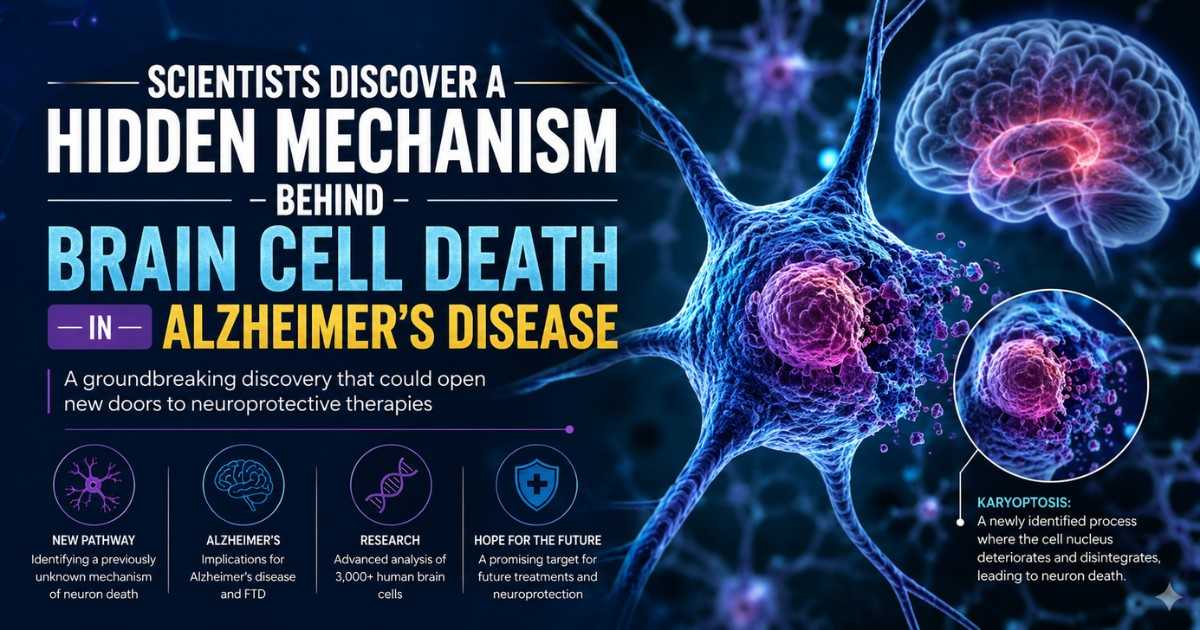
Alzheimer's disease remains one of the greatest challenges in modern neuroscience, affecting millions of people worldwide. While researchers have long understood that abnormal protein accumulation contributes to the disease, the precise mechanism responsible for widespread neuronal loss has remained unclear. A recent breakthrough by researchers at King's College London has now identified a previously overlooked form of brain cell death that may play a critical role in Alzheimer's disease and Frontotemporal Dementia (FTD).
A New Perspective on Neurodegeneration
For decades, scientists have studied well-known pathways of programmed cell death, such as apoptosis, to explain why neurons die during neurodegenerative diseases. However, these mechanisms have not fully accounted for the extensive neuronal damage observed in Alzheimer's patients.
The newly identified process, known as karyoptosis, involves progressive deterioration of the cell nucleus after toxic proteins accumulate within neurons. As the nucleus shrinks and eventually disintegrates, the affected neuron loses its ability to function and ultimately dies. This discovery offers an important missing piece in understanding how neurodegenerative diseases progress.
Evidence from Human Brain Tissue
The research team analyzed approximately 3,000 individual brain cells obtained from patients with Alzheimer's disease, frontotemporal dementia, and healthy controls. Advanced computational techniques enabled the scientists to distinguish multiple forms of neuronal death occurring within brain tissue.
Remarkably, signs of karyoptosis were observed far more frequently in Alzheimer's brain samples than in healthy brain tissue, suggesting that this mechanism may significantly contribute to disease progression.
Why This Discovery Matters
Identifying a new pathway responsible for neuronal death could transform future therapeutic strategies. Rather than treating only the symptoms of Alzheimer's disease, researchers may eventually develop treatments that interrupt this newly identified mechanism before irreversible neuronal damage occurs.
Such neuroprotective approaches could potentially:
- Slow disease progression
- Preserve cognitive function
- Delay memory decline
- Improve long-term quality of life for patients
Although additional laboratory and clinical studies are required, this finding provides researchers with a promising new target for drug development.
Implications for Neuroscience Research
The discovery also highlights the importance of understanding cellular mechanisms involved in neurodegeneration. As research continues to reveal how different forms of cell death contribute to diseases such as Alzheimer's and frontotemporal dementia, scientists move closer to developing more effective precision therapies.
Advances like these reinforce the value of collaborative neuroscience research and demonstrate how modern computational biology, molecular neuroscience, and neuropathology are driving the next generation of medical breakthroughs.
Looking Ahead
While there is currently no cure for Alzheimer's disease, discoveries such as this provide renewed optimism for patients, caregivers, clinicians, and researchers alike. Understanding exactly how neurons die represents a crucial step toward developing interventions capable of slowing or even preventing neurodegeneration.
As the global burden of Alzheimer's disease continues to rise, ongoing research into cellular mechanisms like karyoptosis may ultimately pave the way for innovative treatments that protect brain health and improve patient outcomes.

Quick Links
Explore More
Past Conferences
Past Webinars
General Enquiry
Finance Enquiry
Contact Number
- (+1) 689 303 3812