
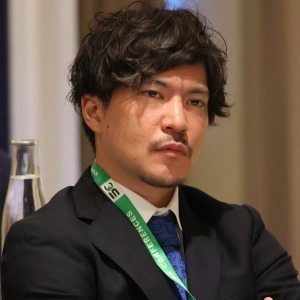
Maoki Matsubara
New Tokyo Hospital, JapanPresentation Title:
Iatrogenic cerebral amyloid angiopathy with rapid recurrent hemorrhage 38 Years after human cadaveric dura mater transplant
Abstract
Background: Cerebral Amyloid Angiopathy (CAA) is a well-established cause of lobar hemorrhage in elderly patients, with most cases being sporadic or hereditary in origin. Iatrogenic CAA (iCAA) is a recently recognized entity resulting from amyloid-β transmission via human cadaveric dura mater transplant employed during craniotomy, with clinical manifestations emerging decades after exposure. Recent reports indicate that iCAA carries a higher hemorrhage recurrence rate and worse functional outcomes than sporadic CAA.
Case Presentation: A 53-year-old man presented right hemiparesis due to a left frontal subcortical hemorrhage, with no family history of cognitive disorder or stroke. He had a history of craniotomy for cerebral hemorrhage of unknown etiology at age 15 during the era when cadaveric dura mater was commonly used. Eight months later, he was readmitted with symptomatic epilepsy, with MRI demonstrating an increased number of cerebral microbleeds. Within 1 month after the onset of epilepsy, he developed a new large right temporal lobe hemorrhage and underwent emergency craniotomy for hematoma evacuation. Intraoperative cortical biopsy specimens stained with Direct Fast Scarlet demonstrated amyloid deposition within thickened vessel walls. Cerebrospinal fluid analysis revealed a decreased Aβ42 level, supporting the diagnosis of iCAA. Unfortunately, despite the craniotomy for hematoma evacuation, three further symptomatic subcortical hemorrhages occurred within only 1 month, resulting in rapid functional deterioration to modified Rankin Scale of 5.
Conclusion: We reported a rare case of iCAA presenting with short-interval recurrent hemorrhages and rapid clinical deterioration. As suggested in previous reports, iCAA may represent an entity with a poorer prognosis compared with conventional sporadic CAA. The precise mechanisms underlying the more aggressive nature of iCAA compared to sporadic CAA remain to be clarified through the accumulation and study of further cases.
Biography
Maoki Matsubara obtained his MD from Nippon Medical School in 2018 and began his medical career as a resident at New Tokyo Hospital. He joined the Department of Neurosurgery at New Tokyo Hospital as a medical staff member in 2020 and served as a Clinical Assistant Professor in the Department of Neurosurgery at Kawasaki Medical University in 2023. In 2025, he returned to New Tokyo Hospital as a neurosurgeon and obtained board certification in Neurosurgery and Stroke Medicine. He currently participates in more than 200 neurosurgical procedures annually while mentoring neurosurgery residents.

Organization Location
1309 Coffeen Avenue, STE 1200, Sheridan, Wyoming 82801, USA
General Enquiry
contact@scientexconferences.com
Finance Enquiry
finance@scientexconferences.com
Call us at
USA : (+1) 689 303 3812