

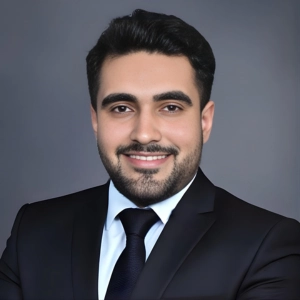
Rupanshu Chhikara
St Martinus University Faculty of Medicine, CuracaoPresentation Title:
Neuroprotective potential of Sodium-Glucose Cotransporter-2 (SGLT2) inhibitors in type 2 diabetes: A narrative review
Abstract
Once primarily celebrated for their glucose-lowering effect and their defense of the heart and kidneys, sodium-glucose cotransporter-2 (SGLT2) inhibitors are now at the center of a compelling new research question: do their benefits extend to the brain? As dementia rates climb globally, this can be linked with the rising prevalence of type 2 diabetes. With this, the search for neuroprotective strategies has become an urgent concern. This narrative review aims to navigate the current evidence to determine whether these drugs can protect patients with diabetes from cognitive decline. We uncover a fascinating dichotomy: a vast array of real-world observational data, encompassing hundreds of thousands of patients, consistently points toward a significant neuroprotective effect, suggesting that SGLT2 inhibitor use is associated with a markedly lower risk of dementia compared to other antidiabetic therapies such as dipeptidyl peptidase-4 (DPP-4) inhibitors or sulfonylureas.
Unfortunately, this promising signal is met with silence from the highest level of evidence available to us, namely, evidence from meta-analyses of randomized controlled trials (RCTs), which, although methodologically rigorous, find no such association. We attempted to argue that this result is not a contradiction but rather a reflection of a scientific puzzle shaped by the limitations of current research. Observational studies offer the necessary long-term view but are susceptible to bias, while existing trials were too short and ill-equipped to capture the long latency of neurodegeneration. Delving deeper, we explore the powerful biological reasoning for neuroprotection, which includes reducing neuroinflammation and improving cerebral blood flow, where SGLT2 inhibitors may even rescue the brain from an energy crisis by providing it with an alternative fuel of ketones instead of glucose.
The current landscape, therefore, is one of cautious optimism. While it is too soon to declare any kind of victory, the convergent evidence from real-world data and strong plausibility presents a powerful case for potential, demanding definitive answers from a new generation of focused, long-term clinical trials.
Biography
Rupanshu Chhikara is a physician-scholar and academic mentor currently serving as a Faculty Mentor and Academic Advisor at St. Martinus University School of Medicine, Curacao. He earned his Doctor of Medicine (MD) degree from St. Martinus University, where he later continued to contribute academically, guiding students through their clinical science years, USMLE preparation, and overall professional development. He is ECFMG certified, further attesting to his international medical training and qualification. He is a Neurology match applicant with a developing academic focus in clinical neuroscience and neurodegenerative disease research. He has authored approximately six PubMed-indexed publications, reflecting his rising contributions to medical literature and dedication to advancing evidence-based neuroscience. His research interests include neurological disorders, neuroimmunology, cognitive health, and innovation in clinical medical education. He aims to expand his research output further in the coming years, advancing both scientific discovery and student mentorship. With strong academic involvement and a passion for cultivating future physicians, he continues to engage in medical education initiatives, curriculum strengthening, and clinical performance development. He remains committed to building meaningful scientific impact and contributing to the rapidly evolving field of neurology while inspiring students toward excellence in clinical science and research.

Organization Location
1309 Coffeen Avenue, STE 1200, Sheridan, Wyoming 82801, USA
Mail us at
Drop us an email for Program enquiry
neuralscience@scientexconferences.com
Registration Enquiry
finance@scientexconferences.com
General Queries
contact@scientexconferences.com
neuralscience@scientexconference.org
Our Social Presence
Call us at
USA : (+1) 689 303 3812