

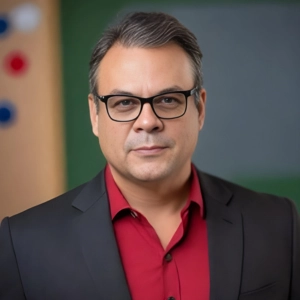
Raul Valverde
Concordia University, CanadaPresentation Title:
Gas Discharge Visualization (GDV) as a novel neuro-biophysical tool for assessing stress and personality: Emerging evidence for mental health and consciousness research
Abstract
Recent advances in biophotonics and bioelectrography suggest that the human biofield—captured through Gas Discharge Visualization (GDV)—may offer a sensitive, non-invasive window into psychoemotional states, stress physiology, and personality-related energetic patterns. Across several domains of neuroscience and mental health research, GDV has begun to demonstrate utility as a quantitative biomarker system capable of reflecting autonomic activity, stress adaptation, emotional processing, and subtle energetic changes traditionally inaccessible to conventional neurophysiological tools. By bringing together these findings, the proposed presentation will argue that GDV technology occupies a unique frontier at the intersection of neuroscience, mental health, and consciousness studies. It offers novel pathways for:
• Quantifying stress and emotional states through biophotonic signatures
• Mapping personality-linked energetic patterns with potential clinical applications
Such an interdisciplinary integration positions GDV as a next-generation tool for mental health research—one capable of bridging subjective experience, neurophysiology, and emerging biofield science. Future multi-participant studies, cross-validation with EEG/HRV/fMRI, and expanded clinical applications will be critical in formalizing GDV’s role in neuroscience and psychological diagnostics.
Biography
Raul Valverde is a professor at Concordia University and the director of research at the Consciousness Research Foundation. He holds a Doctorate in Information Systems from the University of Southern Queensland and an MEng in Electrical Engineering from Concordia University. He also completed a post-doctoral program in experimental psychology at the University of Flores and earned a PhD in Psychology followed by a licensed as a psychologist in Mexico. His current research explores how biophotonic signals correlate with cognitive states, integrating information systems methodologies, quantitative modelling and psychological theory. He has presented this work at the Science of Consciousness conference and at IEEE Systems, Man & Cybernetics, and he is a member of the International Society of Quantum Biology & Pharmacology, Professional Engineers of Ontario, and the Quebec Society for Research in Psychology.

Organization Location
1309 Coffeen Avenue, STE 1200, Sheridan, Wyoming 82801, USA
Mail us at
Drop us an email for Program enquiry
neuralscience@scientexconferences.com
Registration Enquiry
finance@scientexconferences.com
General Queries
contact@scientexconferences.com
neuralscience@scientexconference.org
Our Social Presence
Call us at
USA : (+1) 689 303 3812