

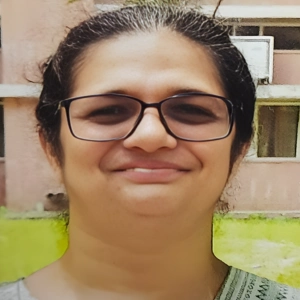
Parineeta Jindal
Government Rehabilitation Institute for Intellectual Disabilities (GRIID), IndiaPresentation Title:
Role of self-affirmations and yogic relaxation techniques in building stress resilience
Abstract
Stress has become a common challenge that, when persistent, can negatively affect emotional balance and long-term health. Stress also leads to difficulty in carrying out daily tasks. Therefore, it is important to develop resilience to stress. Stress resilience is an individual’s capacity to recover from emotional and mental strain. Nowadays, many relaxation techniques are available to develop resilience to stress.
This introspective study explores how self-affirmations and Yogic Relaxation Techniques, specifically the Mind Sound Resonance Technique (MSRT) and Deep Relaxation Technique (DRT), contribute to building stress resilience. Using systematic self-observation and a focused literature review, the study introspected and analysed the effects of these practices on aspects like emotional regulation, cognitive reframing, internal dialogue, and perceived stress.
The analysis indicates that self-affirmations are positive statements that reinforced constructive thinking and shifted the mind away from negative self-talk towards empowering self-talk, regulating emotions, and rebuilding oneself after stress. It leads to boosting self-confidence. Besides, regular practice of relaxation techniques i.e., MSRT and DRT generated deep mental and physical relaxation, calmed the nervous system, thereby altering stress response.
Notably, combining yogic relaxation with self-affirmations appeared to generate a synergistic effect that supports a more centered, balanced, and resilient emotional state.
The study concluded that the practice of self-affirmations and yogic relaxation techniques can foster a calmer, more constructive, and self-assuring way of responding to stress. These can encourage empowering changes in thought patterns, which enrich overall life experience. Furthermore, these practices are practical and accessible tools for fostering and strengthening stress resilience by reshaping and refining inner dialogues and promoting emotional balance.
It is suggested that self-affirmations and MSRT and DRT might be adopted by individuals for building stress resilience, thereby leading life productively and joyfully.
Biography
Parineeta Jindal is a Yoga Therapist at the Government Rehabilitation Institute for Intellectual Disabilities (GRIID), Sector 31-C, Chandigarh, with over 15½ years of dedicated service since January 2010. She earned her Doctor of Philosophy (PhD) from Panjab University, Chandigarh, India, in 2023 for her thesis on Mind Sound Resonance Technique and Deep Relaxation Technique on Mental Efficiency, Perceived Stress, and Activities of Daily Living among Geriatrics. She has 16 published research papers as an author or co-author, and a research study on Swachh Bharat Abhiyan has been accepted for publication. She was awarded the Certificate of Commendation on Independence Day Celebrations from Director GRIID twice in recognition of her hard work & dedication to duty. She trained students with wheelchair users and those with cerebral palsy for a significant yoga demonstration at Independence Day event organised by Chandigarh Administration in 2023, and served as organizing committee members for the Yoga Competition of PwIDs at GRIID. She has participated in International Day of Yoga events, and delivered talks on Yoga at Panjab University & seminar program of AYUSH. She conducts practical exams for Certificate in Yoga subject under NIOS. She initiated organising program on World Meditation Day at GRIID in 2024.

Organization Location
1309 Coffeen Avenue, STE 1200, Sheridan, Wyoming 82801, USA
Mail us at
Drop us an email for Program enquiry
neuralscience@scientexconferences.com
Registration Enquiry
finance@scientexconferences.com
General Queries
contact@scientexconferences.com
neuralscience@scientexconference.org
Our Social Presence
Call us at
USA : (+1) 689 303 3812