

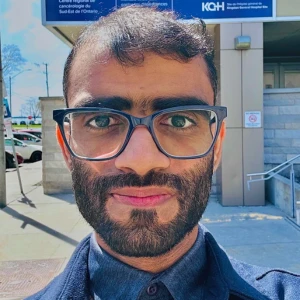
Mustafa A Alhammad
King Abdulaziz University, KSAPresentation Title:
The impact of childhood maltreatment on the development of borderline personality disorder in adolescents: A narrative review
Abstract
The influence of early life trauma on the emergence of borderline personality symptoms has been extensively researched. However, despite the established correlation between childhood maltreatment and borderline personality disorder (BPD), the specific types of trauma and the mediating pathways remain insufficiently mapped. While sexual abuse has received substantial attention due to its measurable clinical impact, the roles of withdrawal and emotional neglect lack early detection and intervention during childhood. Understanding the multifactorial origins of BPD is essential for developing early preventive strategies and effective therapeutic models. This review discusses how the multiple and cumulative effects of maltreatment, including omission-type maltreatment such as emotional neglect, may contribute to the development of BPD through both physical and psychological mediators. This narrative review emphasizes the necessity of recognizing invisible or under-addressed trauma types, proposing conceptual pathways, and informing trauma-informed care focused on the physical, emotional, and social safety of children and adolescents.
Biography
Mustafa A. Alhammad is a researcher and academic affiliated with the Faculty of Medicine at King Abdulaziz University (KAU), Rabigh, Saudi Arabia, currently practicing and contributing to psychosomatic medicine in Kingston, Canada. His clinical interests focus on the developmental formation of childhood personality and how environmental stressors shape subconscious processes and long-term psychopathology. His therapeutic interests extend to psychodynamic frameworks, with an emphasis on mind–body integration in understanding and modulating neurophysiological processes.

Organization Location
1309 Coffeen Avenue, STE 1200, Sheridan, Wyoming 82801, USA
Mail us at
Drop us an email for Program enquiry
neuralscience@scientexconferences.com
Registration Enquiry
finance@scientexconferences.com
General Queries
contact@scientexconferences.com
neuralscience@scientexconference.org
Our Social Presence
Call us at
USA : (+1) 689 303 3812