

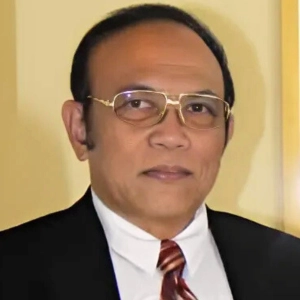
Darwono A Bambang
Tarumanagara University, IndonesiaPresentation Title:
Spinal cord and brain injury. Could paralysis be cured? Animal study and case report
Abstract
Introduction: A long dogma in neuroscience (Ramon Y Cayal) that in chronic phase of Spinal Cord Injury (SCI) and stroke, there are currently no effective treatment option, within 1 to 2 years lesion has ceased to progress and continuing deficit are stabilized, and nothing regenerated. Secretome is defined as the set of factors/molecules secreted to the extracellular space. It is a collective term of paracrine soluble factors produced by stem cells and utilized for the inter-cell communication, are also responsible for tissue development, homeostasis and (Re)-generation, resolves several safety considerations potentially associated with the transplantation of living stem cell and being use as a cell free therapy. Exosome is the smallest vesicle 30-150 nm, a family of secretome and can pass through the blood brain barrier as a nano-sized cargo vehicle of complex bioactive proteins, growth factors and miRNA. It’s content has the ability to stimulate neurogenesis of Neuro progenitor cells (NPGs) which are available in dentate gyrus of hippocampus, subventricular zone, cortex of the brain and also in spinal cord. Asia A mean a complete Spinal Cord Injury (SCI) with no motor and no sensory function including in sacral segments. Prognosis natural healing of SCI Asia A: - 94.4% remain Asia A; - 3.5% improved to Asia B; - 1.05% improved to Asia C and D, while SCI Asia C: up to 80% improved to Asia D or E. In chronic phase of Spinal Cord Injury (6 months after SCI), there are currently no effective treatment option and within 1 to 2 years lesion has ceased to progress and continuing deficit are stabilized (Dogma of Ramon Y Cayal).
Method: Animal studies and prospective observation of case series of spinal cord injury and Stroke treated using exosomes. 30 male new Zealand white rabbit, 10-12 weeks old were used. Spinal cord injury model were performed by surgical using compressions methods. Four cases of SCI and two cases of stroke were treated using exosome. Neurologic assessment, pain drawing of the symptoms, MRI and muscle strength grading scale were used to evaluate the clinical progress. The first, second and third cases were treated with Exosome injection intra vena and intrathecal, the continued with Exosome intrathecal. The fourth, fifth and sixth cases were treated with Exosome intrathecal. Fourth case, man 22 years old with SCI Asia C after surgery 1 year ago, fifth case man 19 years old with Cervical SCI Asia A after surgery 3 years ago, and sixth case man 77 years old with stroke 8 years ago, all were treated using exosome intrathecal injection.
Results: Exosome could heal the hind foot paralysis of rabbit animal study. Exosome could improve the paralysis due to spinal cord injury and brain injury. All cases gain improvement. First case , man 48 years old, experienced bicycle accident diagnosed as burst fracture of vertebra T 7 with a complete SCI and already operated stabilization 9 months ago. His status after assessment is chronic phase of Complete SCI Asia A. 2 cc of Exosome derived Wharton jelly was injected intra vena and 2 cc of Exosome derived umbilical vein was injected intrathecal. The treatment was done with the interval of 3 weeks until 4 times. Then continue with exosome injection intrathecal 2 times with interval 1 month. Second case, man 69 years old SCI Asia C due to Cervical surgery 4 months ago with tetraplegia, he also suffered 4 levels Lumbar spondylosis and stenosis. 3 cc of Exosome derived Wharton jelly was injected intrathecal, 3 cc of Exosome derived umbilical vein intra vena, surgery was done to remove the cervical implant and Percutaneous Stenoscopic Lumbar Decompression (PSLD) at four levels of L2-3, L3-4, L4-5, L5-S1. The injection of Exosome was repeated 3 times afterwards with interval of 3 weeks. Then continue with exosome injection intrathecal 4 times with interval 3 weeks. Third case, man 40 years old with right hemiplegic, aphasia and wheelchair due to non-hemorrhagic stroke 1,5 years, had been operated craniotomy for life saving. After Exosome injection intrathecal 4 times with the interval of 1 month, patient can walk with single cane, good communication, tremor and periodic convulsion disappeared. Then continue with exosome injection intrathecal 2 times with interval 1 month. Fourth case, man 22 years old with SCI Asia C after surgery 1 year ago, after intrathecal injection with Exosome can do a jogging exercise. Fifth case man 19 years old with Cervical SCI Asia A after surgery 3 years ago, after injection intrathecal with Exosome spasticity decreased. Sixth case man 77 years old with stroke 8 years ago, after injection intrathecal using exosome can walk using one cane.
Conclusion: This case report shows a motor and muscle improvement of all patients. The first case Complete SCI Asia A in chronic phase and being treated with Exosome improve to Asia C in one year, the second case Incomplete Tetraplegic Asia C improve to Asia D in 1 year, the third case of chronic brain injury in 4 months start to walk using one cane, the fourth case incomplete SCI Asia C can do jogging exercise in 1 month, the fifth case Complete Cervical SCI spasticity decreased and can do sitting in 1 month, the sixth case Stroke 8 years can walk with one cane after 1 month. To support the evidence, a basic animal study using Rabbit was done in collaboration with Animal Teaching Hospital Bogor Agricultural University (IPB). In acute phase of SCI of artificially paralyzed rabbit, 4 weeks after injected with Exosome the hind feet of the rabbit functionally improved and start to jump. The histopathology of the Rabbit shows the regeneration of neuron and glial cells supporting the Asia A case.
Biography
Darwono A Bambang is a distinguished orthopaedic surgeon and academic leader with extensive experience in both clinical practice and teaching. He is serving as head of the orthopaedic sections at both Pluit Hospital and Gading Pluit Hospital in Jakarta, he also leads the rehabilitation section at Gading Pluit. His medical education includes a medical doctor degree from UNISSULA Semarang (1975) and postgraduate qualifications from several prestigious institutions, including a PhD from Gajah Mada University (2000). His expertise spans spine surgery and arthroscopic procedures, with specialized training at institutions across Japan, South Korea, the USA, Singapore, and Australia. In addition to his clinical roles, he is a dedicated educator, holding positions such as senior lecturer at The Veteran Pembangunan Nasional University and the Tarumanagara University. His professional affiliations are extensive, including memberships in the Asia Pacific Society of Minimally Invasive Spine Surgery (PASMISS), the Indonesian Surgeon Association (IKABI), and the North American Spine Society (NASS), among others. He has contributed significantly to Indonesian Medical Organizations, notably serving as general secretary and treasurer of the Indonesian Orthopaedic Association (PABOI), and as President of the Indonesian Spine Society (ISS). He is also a founder of the Indonesian Orthopaedic Spine Society (IOSS). He has received numerous awards for his scholarly contributions, such as; the best paper at several national congresses, and has provided significant research support through projects on topics like low back pain, vesselplasty, and treatments for degenerative spine disorders. His work extends to public health education, with editorial roles in various medical publications, including Majalah Kesehatan ABRI and Doctor’s Guide. His contributions to orthopaedic research and his leadership in multiple professional associations highlight his dedication to advancing orthopaedic and spine surgery both in Indonesia and internationally.

Organization Location
1309 Coffeen Avenue, STE 1200, Sheridan, Wyoming 82801, USA
Mail us at
Drop us an email for Program enquiry
neuralscience@scientexconferences.com
Registration Enquiry
finance@scientexconferences.com
General Queries
contact@scientexconferences.com
neuralscience@scientexconference.org
Our Social Presence
Call us at
USA : (+1) 689 303 3812